The plan, step by step
Arriving
Read the box
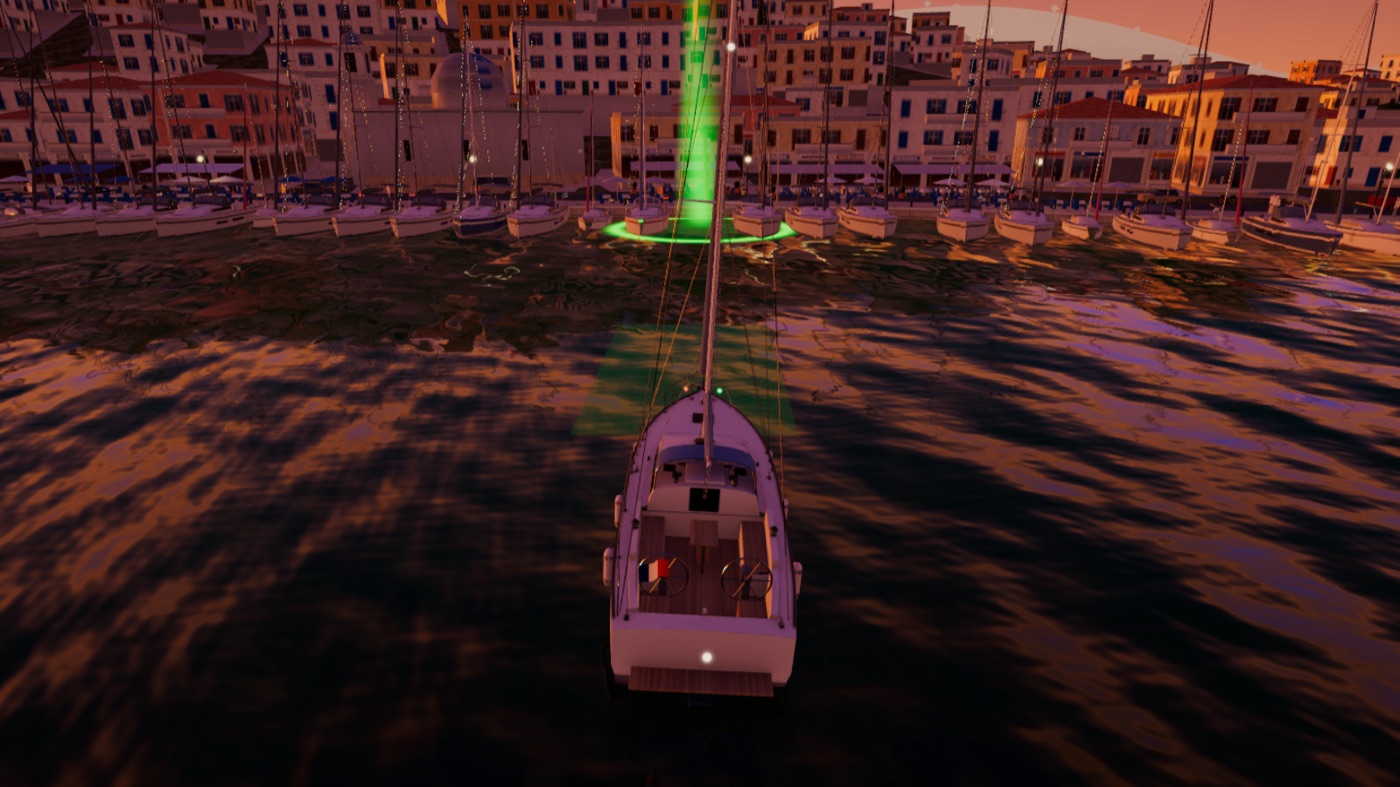
Slowly down the fairway. A green sign at the end of the box means it is free, a red one that it is taken. The box should be about a metre wider than your beam. Note where the wind is coming from.
HelmTurn into the box
A positive turn into the box, allowing for leeway from the wind. Keep enough way to steer: with no speed, the helm stops answering. Fenders ready on deck, never over the side.
HelmWindward pile first
As the widest part of the boat passes between the piles, the crew, amidships on the windward side, drops the stern line over the windward pile. The second crew does the same to leeward.
Windward crewBrake and pay out
Carry on straight towards the pontoon and brake with the engine. The windward stern line pays out, then the helm holds it on a winch near the wheel. Once past the piles, the fenders go over the side.
HelmBow to the pontoon
The bow stops close to the pontoon. The crew takes the windward bow line to the pontoon cleat. Slow ahead against the stern line holds the distance while the leeward lines go on.
Bow crew
Leaving
Prepare
Bring all the fenders in: hanging over the side, they catch on the piles. Let go the leeward lines first. The windward stern line goes on a winch near the helm.
CrewHold the bow to windward
In a crosswind, take in a little of the windward bow line, then ease it as the boat goes astern: the bow doesn’t fall onto the neighbour.
Bow crewGo astern between the piles
Slow astern, straight down the line of the box. The helm takes in the stern line as you go. No line must trail in the water: the propeller will suck it in.
HelmLet go the windward pile last
Once out of the box, let go the line on the windward pile and bring it in quickly. Put the stern to windward: the bow falls off and the boat turns into the fairway.
Helm
Who does what
On the helm
Calls the windward pile, judges the way on, brakes with the engine and holds the windward stern line on a winch near the helm.
Windward crew
Amidships, on the windward side, drops the stern line over the pile on the way past, then goes forward with the windward bow line.
Second crew
Drops the leeward stern line over the other pile, then takes the leeward bow line. With only one crew, they go for the windward pile only.
The dangers
A fender caught on a pile
A fender hanging over the side gets trapped between the hull and the pile and swings the boat round in the box. Keep them on deck until you are past the piles.
The boat pushed along the piles
Stopped at the wrong moment in a crosswind, the boat goes sideways onto the row of piles and the neighbours. Keep way on until the windward line is holding.
A line round the prop
Going astern out of the box, a line that has been let go and is trailing in the water gets sucked into the propeller. Bring it in at once.
Falling while throwing
A missed throw at a pile carries the crew over with their own momentum. Hold on firmly before you throw.
The line slipping off the pile
A simple loop over the pile can work loose and slide off the top, especially as the water rises. If you are staying, replace it with a knot that holds even without load (two half hitches).
Common mistakes
- Coming in too fast. It tops the list of common mistakes. The crew has no time to get the stern line on, and without it nothing stops the bow before the pontoon.
- Going in unprepared. All four lines must be ready before you go in, the stern lines coiled with a loop and led to the helm. Once in the box, it is too late.
- Taking the leeward pile first. The stern blows off to leeward while you look for the other pile. It is the windward line that holds the boat.
- Relying on a throw. Throwing a loop over a pile rarely works. Throwing is a last resort, not the plan.
- Putting a running loop round the pile. It is hard to undo when you leave. A line passed round the pile, or on a slip, can be let go from on board.
- Watching the line instead of the boat. The helm first steers the boat into the box and brakes her. The stern line is tightened once the boat has stopped.
Depending on the wind
- Crosswind. This is the tricky case. If you can, choose a box to windward of a boat that is already moored: if you are pushed sideways, you only end up on her fenders. Windward pile first, then the windward bow line. Put your biggest fender at the leeward bow. The stern lines can be led through the midships cleats to the winches: motor against them and ease them all the way to the pontoon.
- Wind or current along the box. Come in facing the wind or the current, whichever is stronger. The boat stays in line; the windward pile matters less, but the stern line is still the first one on.
- Going in astern. Some skippers, in the Netherlands as in Germany, prefer to go in stern to the pontoon. You then pivot round the windward pile on two springs put on together. Going astern, the rudder gets no propeller wash: you need way on, and prop walk pushes the stern sideways.
- Box longer than the boat. In strong winds, or if the box is a metre or more longer than the boat, cross the stern lines: the boat swings less from side to side.
Local customs
- Netherlands, Germany, Denmark, the Baltic: most boats go in bows to the pontoon, with the stern held by two piles (this is also how the app does it at Enkhuizen and Kiel).
- A green sign at the end of the box means the berth is free, a red one that it is unavailable. In Germany and Denmark, you pick a green box that fits your boat, moor up, then go and pay.
- The harbour office may ask for your beam as well as your length: give accurate figures.
- On the pontoon, a neighbour often takes your bow line and makes it fast on a cleat. When you leave, too, neighbours are happy to help.
- Many northern boats have a heavy rubbing strake to rub against the piles. Without one, warps stretched along the topsides do the job instead.
- In Italy, harbour piles are called “briccole”; in the Languedoc, they are called “ducs d’Albe”.
On the VHF
“Harbour office, this is sailing yacht Alcyone. Request a box berth for one night, length eleven metres, beam three point five metres. Over.”
See also

Practise it
Level 14 · Enkhuizen
Do this manoeuvre again in the app, as many times as you need, without scratching a hull.