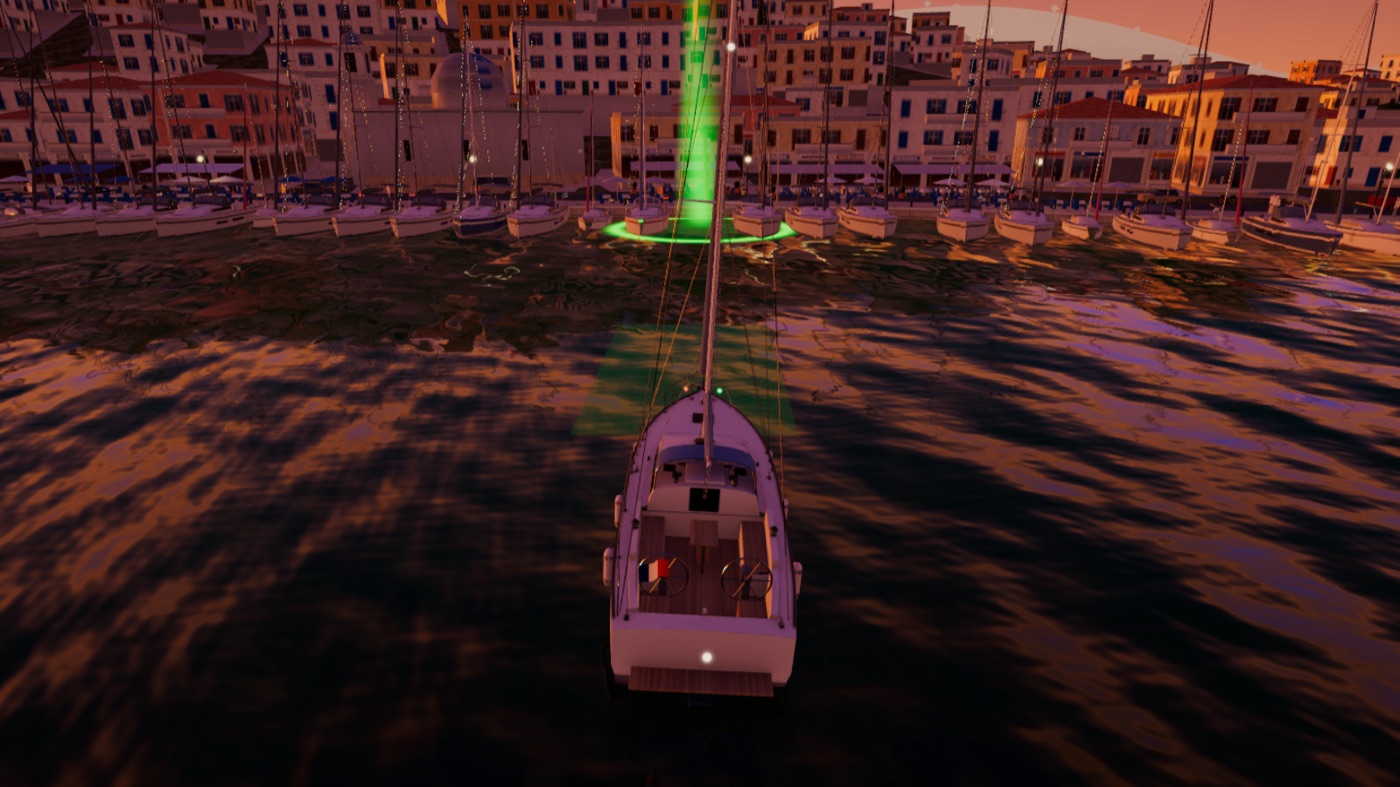
The plan, step by step
Arriving
Come down the fairway
At tickover, just enough throttle to stay in control, fenders out on both sides. Keep to the far side of the fairway so you have room to turn, and turn into the wind, never downwind.
HelmWide turn, finger on the outside
Make a wide turn and aim for the middle of the berth. The finger should be on the outside of the turn: the boat skids towards it and away from your neighbour.
HelmCarry your way in
In neutral, the boat glides into the berth. Short bursts of astern stop her before the bow touches the pontoon: not too early, not for too long.
HelmStep off with the midships line
From the shrouds, where the boat is widest, the crew steps down onto the finger without jumping, and straight away makes the midships line fast on the cleat at the end of the finger.
CrewMotor against the line
Ahead at tickover, helm away from the finger: the stern swings in and the boat stops moving. If the wind is blowing you off the finger, a little more throttle.
HelmBow lines and stern spring
Take both bow lines to the pontoon, then the stern spring, and centre the boat in the berth. Only then go into neutral.
Crew
Leaving
Get ready to leave
With the engine warm, test ahead and astern. Work out which way prop walk will pull the stern and which side the way out is.
HelmHold, then let go
Ahead at tickover, helm away from the finger: the boat stays pinned. Take the lines off, leeward ones first, and rig the last one on a slip so it can be let go from on board.
Helm and crewGo astern decisively
Helm amidships, astern. Gather enough way for the rudder to bite: a boat going astern too slowly will not steer.
HelmPivot once clear
About a boat length from the boats opposite, neutral, then ahead with the helm towards the exit. With a strong wind behind you, keep going astern until you are out of the pontoons.
Helm
Who does what
On the helm
Stays on the wheel and the throttle for the whole manoeuvre, calls which side the finger will be and when the crew can step off.
Crew amidships
Midships line coiled in hand, waits at the shrouds, steps onto the finger when the boat has almost stopped and makes the line fast on the cleat at the end of the finger.
Second crew (if there are three of you)
Gets the bow lines and a roving fender ready, then takes the bow lines to the pontoon once the boat is held.
The dangers
Jumping onto a short finger
A floating finger moves when you jump onto it. Step down under control, from the shrouds, when the boat has almost stopped. If the gap is too wide, don’t step off: go round again.
A hand or foot between hull and finger
Never put any part of your body between the boat and the finger, the pontoon or the neighbour. Use a fender, not a hand.
Wind blowing you off the finger pushes you onto the neighbour
With no way on and a crosswind, the boat drifts to leeward within seconds. Get the midships line on at once, and have fenders out on the neighbour’s side too.
A line round the prop
A line trailing in the water gets caught in the propeller and stops the engine at the worst moment. Keep lines coiled, never in the water.
The corner between finger and pontoon
At Les Minimes, metal brackets between the finger and the pontoon are reported to be very hard on hulls. Stop the bow short of them.
Common mistakes
- Going astern too early and for too long. The boat stops in the middle of the fairway, prop walk swings her round, and she has no way left to get in. Short bursts are enough.
- Holding only the bow, or only the stern. From the finger, hold the bow and the stern swings away; hold the stern and the bow goes. A midships line holds both.
- Keeping the finger on the inside of the turn. The boat skids towards the outside of the turn: towards the neighbour, away from the finger.
- Turning tight round the neighbour’s stern. In a crosswind, the boat drifts onto the leeward boat before she is lined up. Turn in the open space of the fairway.
- Persisting with a botched approach. If the approach isn’t right, go astern, back out and start again. There is no shame in it.
- Jamming lines with tight round turns. When you leave, you need to let go quickly. A round turn and two half hitches, or a cleat hitch without jamming turns.
Depending on the wind
- Crosswind blowing you off the finger. Finger on the outside of the turn, a little more way on the approach, midships line on first, then hold the boat against it with the engine. With twin rudders, motoring against the line works poorly: sailors disagree on whether it works a little or not at all. Leaning on the neighbour with good fenders is common practice.
- Crosswind pushing you onto the finger. Stop a metre or two off the berth and let the wind carry you onto the finger.
- Headwind, blowing off the pontoon. The wind slows the boat: stay in gear at tickover until the midships line is made fast.
- Wind from astern, pushing you towards the pontoon. Brake early, then let her run. When leaving, the boat stays head to wind as she goes astern: keep going astern until you are out of the pontoons.
- Current. Watch the neighbours’ lines, taut or slack, to get a feel for the current. In a harbour with a strong current, berth facing into it and come in with enough speed not to be swept sideways.
- Going in astern. Possible if the boat handles well astern and prop walk pushes you towards the finger. Come down the fairway in astern, stern line first, then the midships line. With a long keel, it is not recommended.
Local customs
- Atlantic, Channel, North Sea: the custom is bows to the pontoon; the finger is used to get on and off from the side.
- France: fingers often have rings or low cleats that are hard to lasso; some harbours, such as Le Crouesty, have a cleat halfway along the finger.
- United Kingdom: you lasso the cleat at the end of the finger, and some berth holders leave a line on a pole in their berth so it can be picked up on the way in.
- Italy: finger berths are often taken stern to the quay, with two crossed stern lines; the first line on runs from the end of the finger and stops the stern hitting the quay.
- Spain, Atlantic coast (Galicia): some harbours state that boats berth bows-in, moored to fingers.
On the VHF
“Port des Minimes, this is sailing yacht Alcyone, eleven metres. Request a berth for one night. Over.”
See also

Practise it
Level 1 · La Rochelle
Do this manoeuvre again in the app, as many times as you need, without scratching a hull.